The Schengen Area offers immense convenience for travelers wishing to visit multiple European countries, whether for tourism, business, or family visits. Understanding the visa process and adhering to the rules can ensure a smooth and enjoyable experience exploring Europe.

Visa
Visit Visa
SCHENGEN VISA
Schengen
Overview
Description
SCHENGEN VISA
Description
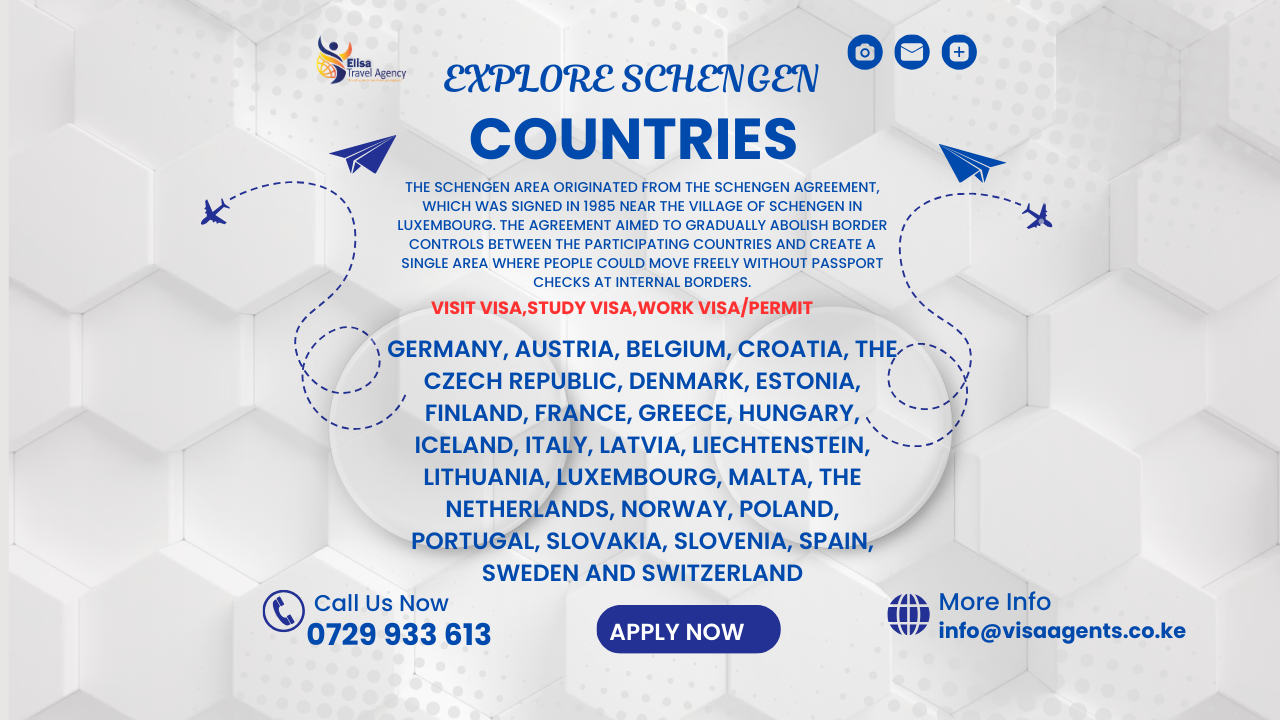
The Schengen Area is a group of European countries that have abolished internal borders and allow for the free and unrestricted movement of people within the area. The area is named after the Schengen Agreement, which was signed in 1985 in the village of Schengen, Luxembourg. This agreement enables travelers to move between member countries without having to go through passport controls.
Key Features of the Schengen Area:
- Free Movement of People: The primary feature of the Schengen Area is the abolition of internal borders. This means once you enter a Schengen country, you can travel freely to other Schengen countries without having to go through border checks.
- Single Visa for Multiple Countries: If you hold a Schengen visa, you can travel to all the member countries for up to 90 days within a 180-day period, depending on your visa type. This makes it easier for tourists and business travelers to explore multiple countries without having to apply for individual visas.
- External Borders Control: While internal borders are open, external borders (e.g., airports, ports, land borders with non-Schengen countries) are controlled. Every country in the Schengen Area has agreed on a common approach to securing external borders.
- Common Visa Policy: All Schengen member countries follow a unified visa policy, which means that a Schengen visa obtained from one country can be used to enter any of the other Schengen member states.
- Unified Police and Judicial Cooperation: Schengen members cooperate on security matters, such as police and judicial cooperation. This helps combat crime, human trafficking, terrorism, and other cross-border threats.
Current Schengen Area Members:
As of now, 27 European countries are part of the Schengen Area. These countries have fully implemented the Schengen rules for border control and visa policies:
- Austria
- Belgium
- Czech Republic
- Denmark
- Estonia
- Finland
- France
- Germany
- Greece
- Hungary
- Iceland
- Italy
- Latvia
- Lithuania
- Luxembourg
- Malta
- Netherlands
- Norway
- Poland
- Portugal
- Slovakia
- Slovenia
- Spain
- Sweden
- Switzerland
- Liechtenstein
- Lithuania
Schengen Visa Types:
- Short-Stay Visa (Type C): The most common visa, typically for tourism, business, or family visits. Valid for stays of up to 90 days within a 180-day period.
- Long-Stay Visa (Type D): Issued for stays longer than 90 days, such as for study, employment, or family reunification. This visa is generally only valid for one country and does not grant you access to the entire Schengen Area.
- Multiple-Entry Visa: A visa that allows you to enter and exit the Schengen Area multiple times within the validity period, provided you don’t exceed the 90 days within 180 days rule.
Benefits of the Schengen Area:
- Easier Travel: No need for additional visas when traveling between Schengen countries. This simplifies travel across Europe for tourists, business travelers, and other visitors.
- Boosts Trade and Tourism: The Schengen Area encourages greater trade, tourism, and business exchange between its members due to the ease of movement and common visa policy.
- Cultural Exchange: Travelers can experience multiple countries, cultures, and languages within one trip.
- Security Cooperation: Member states work together to combat crime and improve internal security.
Details
Updated on January 31, 2025 at 11:44 am- Price: Consultation Available
- Property Status: Visit Visa, Visa